
by
Accelsius
There’s a stark contrast in the time taken to build a data center vs. the time taken to develop the GPUs you’ll deploy inside it. On average, it takes a new data center approx. 18-24 months to be built, and often four years or more for the power company to connect it; meanwhile, we hear announcements of new chip generations each and every year, emitting greater levels of heat and driving up rack densities. Thanks to GPU advancements, NVIDIA racks alone have gone from ~132kW in 2024 (with GB200 NVL72s) to ~230kW in 2026 (with Vera Rubin NVL72s). 600kW Kyber racks are planned for late 2027, and 1MW racks is expected to arrive by 2030.
Think of it like this: a facility designed today will open for business around 2030; for now, the chips it’ll cool are mostly a complete mystery. So how do we reconcile this “tortoise vs. hare” discrepancy between data center builds and AI-driven compute? When it comes to cooling, the answer is simple: make sure the cooling infrastructure you install today will withstand the thermal output of multiple GPU generations.
A key metric that reveals the resilience of your chosen cooling technology is its flow rate, or the liters of coolant per minute needed to carry away each kilowatt of heat. Higher flow rates are like higher blood pressure: there’s system-level risk as it increases. For liquid cooling solutions, those elevated flow rates correlate to increased chance of erosion, corrosion, pumping failure, and leaks—all of which may lead to total operational failure if the liquid you’re using is water-based.
The standard flow rate for single-phase direct-to-chip (1P DTC), a water-based cooling solution, is 1.5LPM/kW. On its own, that flow rate may not seem like a major driver of strain and risk for AI hardware. Once it’s scaled to accommodate the NVIDIA rack densities we mentioned above, however, those flow rates can suitably become a cause for concern:
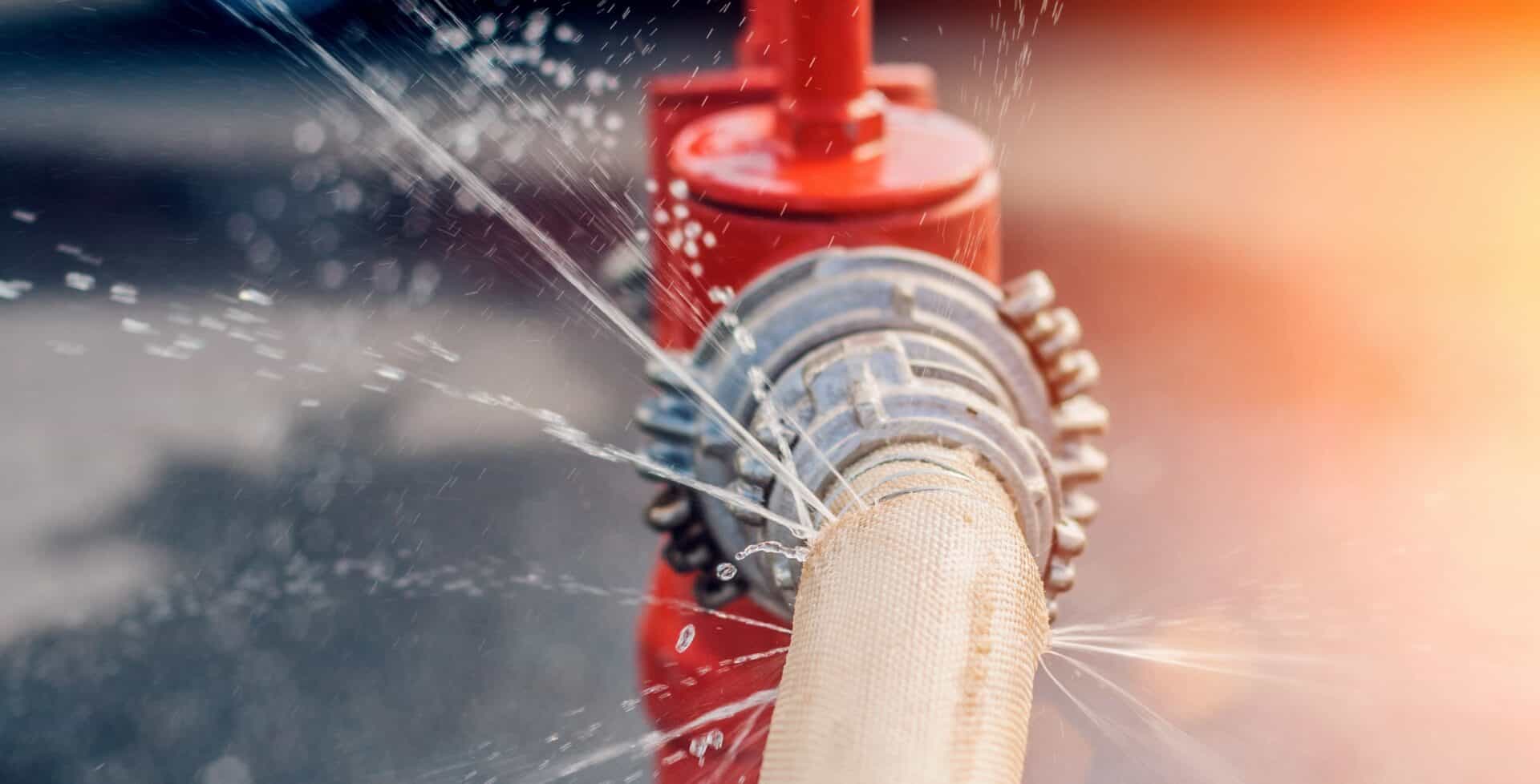
- For a Vera Rubin rack: 1P DTC would need to reach 345LPM. That’s the equivalent of a fire hose with a 1.5” nozzle, which a single firefighter could drag into a burning building.
- For a Kyber rack: 1P DTC needs to hit 900LPM. That’s almost three times as what’s needed for Vera Rubin; it’d equate to the force of a fire hose with a 2.5” nozzle. The pushback of a hose of that size requires 2-3 firefighters to keep it steady.
- For a 1MW rack: The requirement is 1500LPM. That’s the force of a hose bolted to the top of a fire truck, otherwise known as a “deck gun.” Nobody holds it; it requires the anchoring weight of the vehicle to maintain its aim.
Even at the lowest density described—this year’s Vera Rubins—you’d still have water shooting through your systems with the force of a fire hose. And with billions of dollars’ worth of hardware deployed in your average AI factory, any tactic that allows you reduce stress to your system could save you from serious financial damage.
One of the easiest ways to reduce flow rates—and therefore reduce risk? Use a refrigerant-based cooling system that’s allowed to boil, otherwise known as two-phase. Most two-phase solutions—including NeuCool®—deliver one-third the flow rate as your standard liquid-only (or single-phase) cooling technology.
The science of single-phase isn’t keeping up
Because 1P DTC isn’t simply allowed to boil when it reaches a certain level of heat absorption, its flow rate is dictated by its ΔT, or how much the coolant temperature rises in the time between entering and exiting the cold plate.
Traditionally, a key method for enabling a larger ΔT was to lower the facility water system (FWS) temperature, further chilling the coolant before it absorbs chip-level heat. But lowering FWS temperatures consumes considerable energy, and with local communities pushing back against data center development because of the current energy they consume, making facility water even colder is no longer a viable method. With NVIDIA’s announcement of 45°C as the new FWS standard, single-phase flow rates have nowhere to go but up.
Meanwhile, two-phase avoids this trade-off by absorbing heat via boiling at a near-constant temperature. Its basic physics is a major reason it has one-third the flow rate of single-phase, which translates to substantially reduced strain on your surrounding plumbing.
Said another way: two-phase can buy you about three times more compute per current unit of flow, providing enough headroom for the next three rack generations.
Single-phase vs. two-phase: Where the plumbing runs out
Let’s return to the thermal outputs of those NVIDIA racks we mentioned at the top of the article. Given the 1.5LPM/kW of single-phase vs. the .5LPM/kW of two-phase, we can see just how quickly you’d need to swap out your plumbing for each new chip generation based on your cooling technology:
- Rack: The liquid supply a GB200 rack needs on single-phase could cool a rack three times as powerful on two-phase; that’s enough for Vera Rubin with room to spare.
- Tray connectors: Given the flow supported by most standard quick disconnects today, a Rubin tray would already hit 1P’s limit.
- Server plumbing: With 1P, you’d have to more than double your server plumbing size to go from GB300 to Kyber.
- Pumps: A pump’s energy use depends on the amount and velocity of the liquid it moves. Because two-phase refrigerants move one-third as quickly as 1P DTC, that translates to roughly a third of the energy consumed. It’s even less moving through the same pipes, because less liquid equals less resistance. That means you can drive down energy costs while retaining smaller pumps for longer.
Two-phase: Deploy today for tomorrow’s thermal challenges
We’ve often indicated that two-phase direct-to-chip is itself a “set-it-and-forget-it” solution. With flow rates determining available thermal runways for existing infrastructure, we think it’s easy to extend two-phase’s worry-free operations to its surrounding plumbing.
Simply put: buy single-phase cooling, and the plumbing you install for one generation of AI chips will be outgrown by the next one. Buy two-phase, and the infrastructure you install on Day One of your data center will be ready to meet whatever challenges the future may bring.