
by
Accelsius
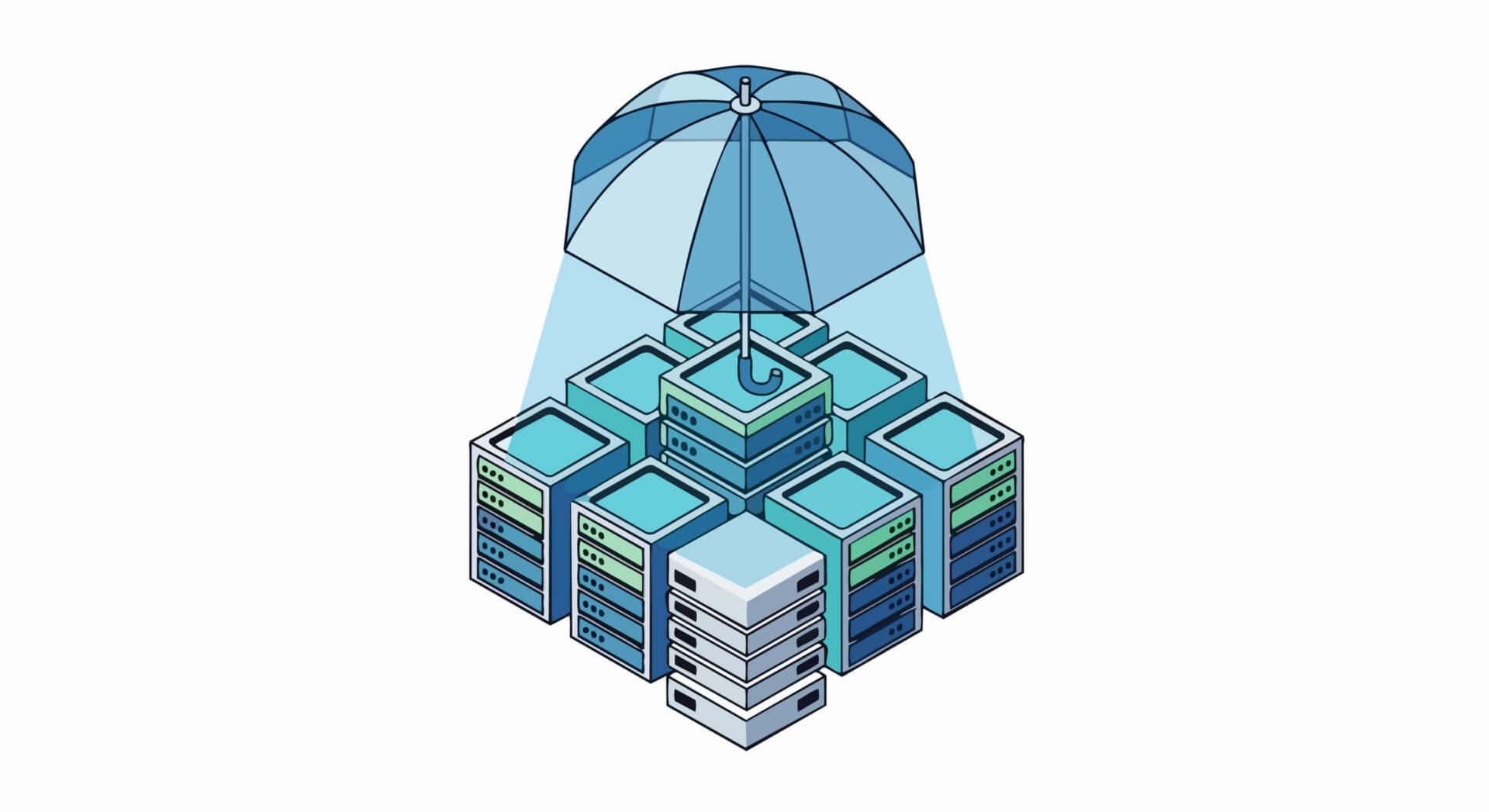
The economics of data center infrastructure are shifting—and not just because of skyrocketing AI demand. Insurance has emerged as a quieter yet no less powerful force. As operators deploy ever-denser GPU clusters, insurers have started to treat thermal management architecture as a core risk variable.
Recent analysis from S&P Global Ratings underscores the scale of this economic shift. Alongside its belief that annual investment in data centers may surpass $300B by 2027, the firm projects that data center insurance premiums could reach $10B by the end of this year. Long-term forecasts from Swiss Re estimate this market exceeding $24 billion by 2030. For context, the entire global aviation insurance market—long considered one of the largest specialty categories—generates roughly $5B each year.
The key driver of this surge appears to be what’s inside a standard AI data center, rather than the pace of their construction. A single hyperscale campus can house $2–5 billion in GPUs, power systems, and supporting infrastructure. At rack densities exceeding 100kW (and rapidly climbing) the acceptable margin for error becomes vanishingly small. In these environments, any cooling failure is rendered a financial catastrophe, destroying millions of dollars in hardware with minutes, and costing hundreds of millions in hours of downtime.
Simply put: if your cooling system fails, your entire asset base is at risk—and insurers are pricing accordingly. Therefore, adopting the right liquid cooling solution can generate cascading financial savings, assuring both facility operators and insurance underwriters that you won’t need to rip out, repair, and/or replace the entirety of your AI investments when leaks occur.
Cooling Becomes a Financial Lever
There’s a common saying in this industry: “People in data centers love innovation—as long as it’s ten years old.” For years, cooling decisions have largely been dictated by this skew toward familiarity. Concerns over leak-based damages have been largely ignored for the sake of adopting incumbent solutions—until, of course, it’s too late.
The truth is that traditional cooling approaches, particularly water-based systems, carry inherent vulnerabilities. Water leaks, pump failures, corrosion, and complex maintenance requirements introduce multiple potential points of failure. Even single-phase direct-to-chip (1P D2C) cooling—often viewed as a step forward—retains many of these risks. It still relies on pumped liquid, still introduces water into sensitive environments, and still requires a whole new workforce to maintain its cooling potential.
While these risks are manageable at lower densities, they pose an existential threat with AI-level workloads. As such, it’s easy to see why a waterless cooling approach that’s able to boost reliability and eliminate any risk of financial ruin would become hugely appealing for the insurance market.
Enter: NeuCool®.
While these risks are manageable at lower densities, they pose an existential threat with AI-level workloads. As such, it’s easy to see why a waterless cooling approach that’s able to boost reliability and eliminate any risk of financial ruin would become hugely appealing for the insurance market.
Why Two-Phase Changes the Risk Equation
The value proposition of our NeuCool two-phase direct-to-chip solution extends beyond unparalleled chip-level performance (at 4500W+) or five-year TCO savings (at 8-17% vs. 1P D2C). It’s about protecting the full lifecycle value of your IT hardware—often by simply avoiding the structural issues of older cooling methods.
We’ve written elsewhere about the greater heat absorption potential of two-phase’s liquid boiling into vapor, and how single-phase—which remains a liquid throughout its cooling cycle—must overcompensate with higher pumping power. This increased pumping power translates to an increased strain on critical components, introducing erosion—and therefore, potential points of failure—throughout a single-phase system.
Said another way: with two-phase’s lower pumping power, you effectively reduce—if not outright eliminate—potential points of failure due to system strain caused by flow rates. We’re proven to have a 4-9x lower flow rate than single-phase. You do the math.
Equally important, NeuCool uses a dielectric refrigerant instead of water. In the event of a leak, this fluid does not conduct electricity or corrode components—transforming any two-phase system issue into a non-issue.
From an insurer’s perspective, a system like NeuCool that eradicates entire categories of failure is inherently lower risk. And if insurers are increasingly underwriting policies based on cooling reliability—as the S&P Global Ratings analysis suggests—then technologies like NeuCool become powerful tools for reducing both premiums and exposure.
The Bottom Line
The data center industry is entering a new reality, where reliability is a financial force. As insurers sharpen their focus on thermal management, operators face a clear choice: continue with legacy approaches that carry inherent risks, or adopt architectures designed to eliminate them.
NeuCool supports this reality. Its streamlined design reduces maintenance complexity and operational variability. Its refrigerant-based approach removes water-related risks. And its ability to handle extreme heat flux ensures stability even as chip power continues to rise.
By simplifying operations, removing common sources of failure, simplifying operations, and aligning with emerging insurance priorities, NeuCool offers something increasingly valuable in today’s market: confidence.
In short, by simplifying operations, removing common sources of failure, and aligning with emerging insurance priorities, NeuCool offers something increasingly valuable in today’s market: confidence. And in a world where minutes of failure can mean millions in losses, confidence may be the biggest incentive of all.