
Two-Phase Cooling for the AI Data Center
Two-phase cooling is the most thermally efficient way to remove heat from modern silicon. Instead of moving cold air or pumping water through a server, a dielectric refrigerant boils on contact with the chip and carries the heat away through a phase change. It’s the same physics that makes evaporation feel cold on your skin, applied to the hottest GPUs in the world. Accelsius engineers two-phase, direct-to-chip cooling for data centers running AI and HPC workloads at densities air and single phase systems just can’t reach.
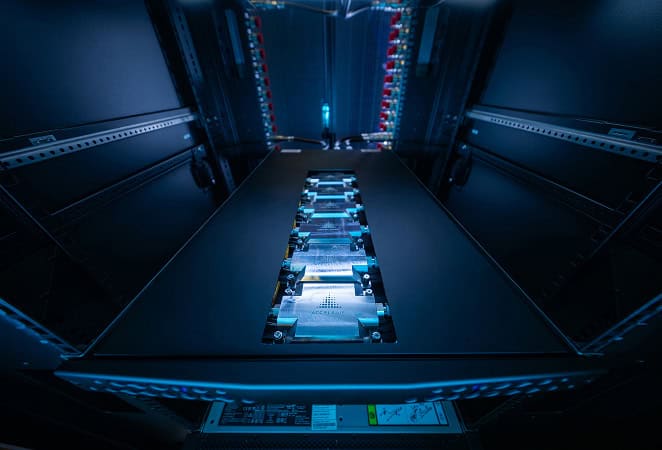
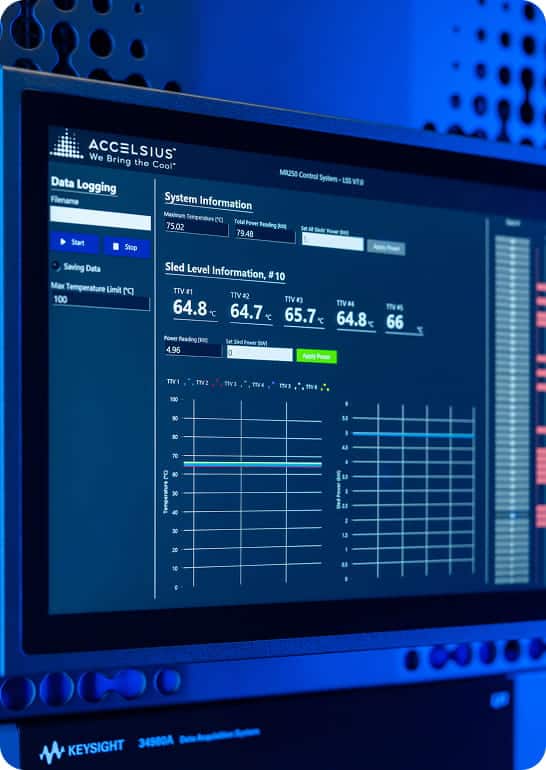
How Two-Phase Cooling Works
Every cooling system moves heat from one place to another. The difference is how efficiently it does this.
Air cooling moves heat by blowing cold air across a hot surface. Single phase direct-to-chip liquid cooling moves it by pumping water or glycol through a cold plate. Both rely on the fluid getting warmer to carry heat away, which puts a ceiling on how much energy you can move with a given volume.
Two-phase cooling works differently. A low pressure dielectric refrigerant flows into a cold plate sitting on the chip. The moment it hits the heated surface, it boils. That phase change of the liquid turning to vapor absorbs large amounts of thermal energy in a tiny volume of fluid. The vapor then leaves the rack, condenses back to liquid in a heat rejection unit, and cycles back into the loop.
The result is higher heat flux, lower flow rates, smaller pumps, and no water near the tech equipment. For a deeper technical look, see A Closer Look at Two-Phase Liquid Cooling and The Art of Two-Phase Cooling.
Two-Phase vs. Single Phase: What Actually Changes
Operators evaluating liquid cooling almost always end up comparing two-phase against single phase direct-to-chip. The architectures look similar from the outside but behave very differently in production.

Single phase direct-to-chip
Uses water glycol (PG25), runs at higher flow rates, requires larger pumps, and puts a water-adjacent fluid loop next to expensive tech equipment. The heat capacity of water bounds how much you can cool per gallon per minute.

Two-phase direct-to-chip
Uses a dielectric refrigerant. The phase change does the work instead of the flow rate. That means smaller infrastructure, lower OpEx, no water risk if a connection ever fails, and headroom to keep scaling as chip TDPs climb.
We’ve covered the head to head in detail in Why Two-Phase is the Winning Choice vs. Single Phase and The Hidden Costs of Single Phase.
Two-Phase Direct-to-Chip vs. Two-Phase Immersion
Two-phase shows up in two very different architectures, and you should be careful not to confuse them.
Two-phase immersion
Submerges entire servers in a tank of dielectric fluid that boils across the whole board. It works, but it changes everything about how the data center operates. Servicing a node means lifting it out of fluid. Rack layout, fluid handling, and service procedures all get rewritten.
Two-phase direct-to-chip
Keeps the rack layout that operators already know. Cold plates sit on the CPUs and GPUs, the fluid loop is contained inside the cold plate and manifold, and servers slide in and out the same way they always have. You get the thermal benefit of two-phase without rebuilding the operational model of the facility.
For most operators, direct-to-chip is the practical path. Immersion makes sense for specific edge cases but rarely for mainstream AI deployments.
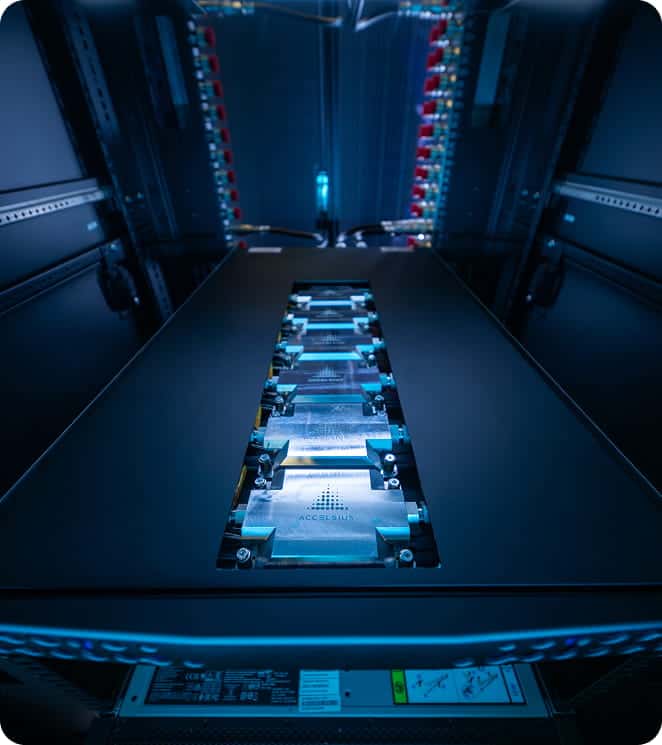
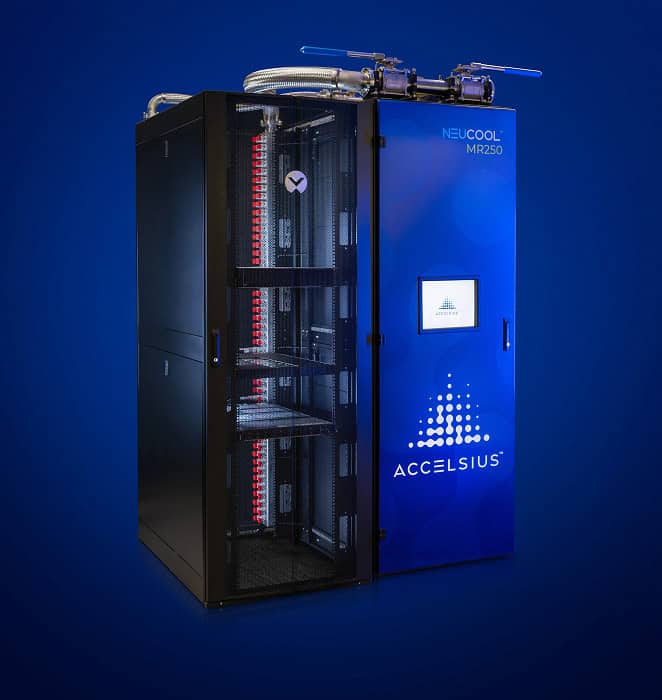
What Accelsius NeuCool Delivers
NeuCool is a two-phase, direct-to-chip system engineered for the silicon driving AI and HPC today.
- 4500W+ cooled per socket, with industry leading 0.020°C/W thermal resistance at 700W+ TDP
- 35% lower annual OpEx versus single phase direct-to-chip
- 8 to 17% lower TCO versus competing liquid cooling architectures, validated in independent Jacobs analysis
- Waterless, dielectric refrigerant with zero ozone depletion potential, ITE safe in the event of a leak
- Retrofit ready in existing facilities, no white space rebuild required
The system is backed by NeuGuard, an enterprise grade support program, and a $100,000 per rack insurance commitment against cooling leak damage.
The Engineering Behind Two-Phase
Two-phase cooling is a research heavy discipline, and Accelsius has been publishing the underlying science alongside the product. The team has presented work on cold plate design, flow restrictors, evaporator geometry, and fluid behavior under high heat flux through ARPA-E, OCP, and peer reviewed channels.
For the technical audience, a few of the most useful pieces:
- High Heat Flux Rack Level Direct-to-Chip Two-Phase Cooling Using Sustainable Fluids
- Investigation of Server Level Direct-to-Chip Two-Phase Cooling Solution for High Power GPUs
- Universal Direct to Chip Cold Plates for Single and Two-Phase Cooling
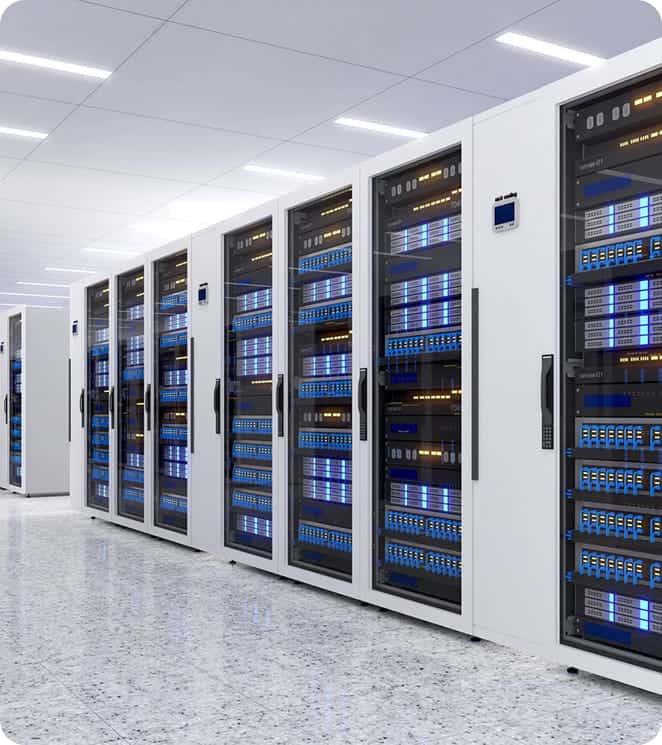
Supported Silicon
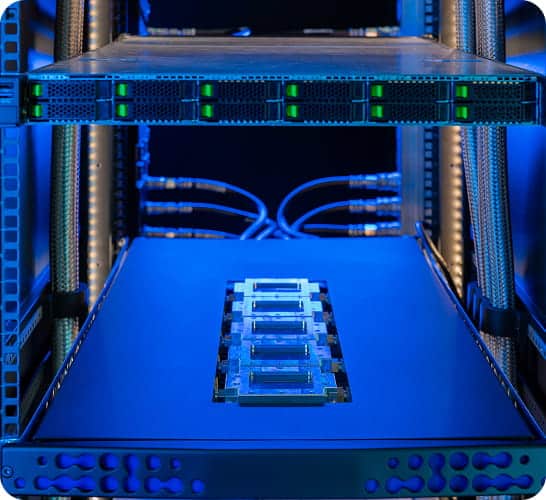
NeuCool two-phase cooling supports the processors driving today’s AI and HPC workloads
CPUs
Intel Sapphire Rapids, Intel Emerald Rapids, AMD EPYC Genoa, AMD EPYC Turin, NVIDIA Grace
GPUs
NVIDIA H100, H200, B200, AMD MI325X, AMD MI355X
Get Started with Two-Phase Cooling
Whether you’re evaluating two-phase against single phase, weighing direct-to-chip against immersion, or planning a new AI build from the ground up, our team will walk you through the architecture, the math, and the deployment path.